The Tampa Scale needs amendment

There is a questionnaire used to supposedly identify ‘fear of movement’ called the Tampa Scale. While I would certainly agree that it is worth identifying which patients have wrong beliefs about their condition and the effects of exercise, I also have serious concerns over some of the elements of this questionnaire. It just doesn’t seem like a rational questionnaire, and yet is very widely used and, it seems, rarely questioned.

I’m going to start with my suggested alternative, then go over the items on the original Tampa scale that I think are not going to help identify mistaken beliefs that could be causing a patient to avoid exercise and activity.

Suggested alternative to the Tampa Scale (for identifying mistaken beliefs − obviously some are true and some untrue as in the original):


1. I need to move as little as possible to avoid injury 1 2 3 4
2. Just because something aggravates my pain that usually does not mean it is dangerous 1 2 3 4
3. Sometimes it is a good idea to exercise even though it’s painful 1 2 3 4
4. When people with pain gradually increase their level of activity, they often don’t experience increased pain 1 2 3 4
5. Although my condition is painful, I would probably be healthier if I were more physically active 1 2 3 4
6. Even though something is causing me a bit of pain, I don’t think it’s actually dangerous 1 2 3 4
7. Some people with chronic pain find that exercise reduces their pain levels 1 2 3 4
8. If I exercise less, I’ll get weaker and am then likely to experience more pain 1 2 3 4
9. Worries about injury put me off exercising 1 2 3 4
10. Pain always means I have injured my body 1 2 3 4
11. Pain always means I have injured my body 1 2 3 4
12. Simply being careful that I do not make any unnecessary movements is the safest thing I can do to prevent my pain from worsening 1 2 3 4

Now for my analysis of the original

The ones that make sense (ish):

3. My body is telling me I have something dangerously wrong. (I suppose ‘dangerously’ suggests an element of dramatization if the problem is not life-threatening etc… though surely more a sign of ‘catastrophising’ than movement avoidance?)

Similar to: 11. I wouldn’t have this much pain if there weren’t something potentially dangerous going on in my body.


7. Pain always means I have injured my body.

(Probably the most useful one in my view, as this is definitely false and a harmful view.)


8. Just because something aggravates my pain does not mean it is dangerous. (Very similar to number 7. Patients need to be informed this is true, if they are not aware it is. Though I would suggest amending it to ‘Just because something aggravates my pain usually does not mean it is dangerous’ because sometimes pain is a sign of danger, obviously! Pain can warn us we are about to tear or break something.)


10. Simply being careful that I do not make any unnecessary movements is the safest thing I can do to prevent my pain from worsening. (Does sound a bit extreme, and shows lack of awareness that inactivity may increase pain long-term.)

Related to: 17. No one should have to exercise when he/she is in pain. (Quite moralistic but I suppose passible. ‘Sometimes it is a good idea to exercise even though it’s painful’ would be better.)


14. It’s really not safe for a person with a condition like mine to be physically active. (Probably a wrong belief in most cases where the questionnaire would be used, so fair enough.)

The ones that are problematic either in general or for some conditions (such as Ehlers Danlos):

2. If I were to try to overcome it, my pain would increase. (Sounds like an unhealthy battle that might well happen that way! Pacing and acceptance of pain are surely more accepted approaches? How about ‘Gradually increasing my level of activity often doesn’t lead to increased pain’?)


5. People aren’t taking my medical condition seriously enough. (No comment needed surely?! Whoever thought that was a sensible one?)


4. My pain would probably be relieved if I were to exercise. (For many people this won’t be true, so strongly disagreeing is the rational option.)

The same goes for: 12. Although my condition is painful, I would be better off if I were physically active. (What does ‘better off’ mean? Why not say ‘healthier’? That would be true in more cases. Being physically active – another subjective term  – might make some people less happy due to the increased pain and fatigue and so ‘better off’ might not feel appropriate to them.)


6. My accident has put my body at risk for the rest of my life. (Ambiguous. Surely accidents do create a greater risk of re-injury in many cases? Or does it mean at risk of death, which probably would be a wrong belief?)

See also: 1. I’m afraid that I might injure myself if I exercise. (In some cases this might be highly unlikely, in other cases quite likely e.g. if you have EDS and are prone to dislocations and sprains, even during very mild exercise).

The same applies to: 9. I am afraid that I might injure myself accidentally.

A related one is: 13. Pain lets me know when to stop exercising so that I don’t injure myself. (Again, is this really unreasonable in all cases? Since when was completely ignoring pain a good idea?)

And: 15. I can’t do all the things normal people do because it’s too easy for me to get injured. (People with EDS are generally advised to avoid contact sports, for example, so again this is not going to be unreasonable in all cases.)

Also: 16. Even though something is causing me a lot of pain, I don’t think it’s actually dangerous. (Are we really advocating that people do things that cause a lot of pain? I’ve generally not been advised to do that, and indeed if something does cause a lot of pain that could be a sign you are about to or have injured yourself.)


Are you a medical practitioner or patient? I’d love to hear your views!

Do also check out my post on re-examining the concept of kinesiophobia in chronic pain patients.

kinga-cichewicz-woman-sitting-in-window-enclosure
Do you think my scale is a better one for identifying when patients are being inactive due to wrong beliefs? Comment below! Photo by Kinga Cichewicz on Unsplash.


Re-examining ‘fear of movement’ (kinesiophobia) in those with chronic pain


(This post is especially relevant to doctors and physiotherapists and others who work with those in chronic pain)

What many physiotherapists and doctors don’t understand about chronic pain

In medical jargon there is the expression kinesiophobia, ‘fear of movement’. I’ve always found this an odd concept. It is said that many chronic pain patients experience a fear of movement because of associating movement with pain. So, the assumption is that they fear pain. Those with chronic pain are, by definition, those who live with the most pain. It doesn’t seem natural to me to talk of fearing something that is already a major part of your life. If you wear a suit to work every day – you may dislike it, sure, but you wouldn’t fear it, would you? You might wear it only when obliged to do so, and wear super-casual clothes the rest of the time i.e. you may well limit your exposure to it, but fearing it would be unusual.

Chronic pain is something only those who experience it can truly understand. It isn’t accurate to think ‘well, I know what pain is, so chronic pain is just having that a lot of the time’ (which those without chronic pain tend to think either sounds awful or not too bad at all). Prior to getting chronic pain I regularly played full-contact rugby. I loved it. I loved tackling people. I didn’t mind the bloody lip, the bruises and feeling a bit battered. Doing this once a week was, however, NOT a taste of chronic pain in any way. Nor was ju-jitsu, or taekwondo, or boxing. Nor was period pain, or toothache, or a headache. The relentlessness (and total pointlessness of the pain) is not possible to imagine until it happens to you.

quino-al-unsplash-rugby-ruck
Just because you’ve experienced pain, it doesn’t mean you know what chronic pain is like. (Photograph by Quino Al on Unsplash)

Imagine you enjoy sitting out in the garden when it’s sunny. One day it’s raining and someone asks you why you’re not sitting in the garden. Er, duh. It’s not much fun in the rain. Do you fear rain? No, it’s just not enjoyable sitting out when it’s raining. So why do some medical professionals really have a problem understanding that people’s preferences change when they live with chronic pain? If anyone wants me to live like I did prior to chronic pain, I want them to sit out in the rain, and enjoy it.

Movement avoidance isn’t necessarily due to fear of harm either

Now imagine you’re someone who enjoys going on walks and also reading. Imagine that you have the option to either read for a while or go for a walk while someone repeatedly stabs you in the neck with a fork, and you can’t stop them. I think I can guess what you’d choose. And what if someone tells you that, although the fork stabbing might be unpleasant, it’s not harmful. You’re still choosing reading, right?

Now what do you think about patients who avoid some pain-inducing activities, choosing to do something else instead?

Only when someone tells you that if you don’t choose the walk you’ll get unfit and get stabbed with a fork during even more activities would you reconsider.

head-in-clamp-pixabay
People need to be given a clear and meaningful reason to do a painful activity, otherwise it just won’t appeal. It sounds simple, but seems to get forgotten.


A common belief is that patients avoid movement because they believe pain signifies damage to the body. Well, I’m sure some people do, and it’s certainly right to point out that pain can be completely meaningless and unhelpful, as is often the case with chronic pain.

But that’s not necessarily going to make someone start being as active as they used to be, because some activities are just not appealing any more, or not as appealing as pain-free options. I get headaches watching films, so don’t do it as often as I used to, but have gained a great love for podcasts and audiobooks. I’m not scared of the pain watching a film brings on… I’d just rather do something else.

Of course, what really is an issue and what patients do need to know is that if they avoid all physical activity, they’ll lose muscle tone and may experience more pain in the long run. Knowing this will potentially reduce ‘movement avoidance’ in patients who are motivated by long-term goals; perhaps not so much others.

Also, I’ve come across a few things recently suggesting the role of physiotherapists when dealing with chronic pain patients is to get them moving more. Hmm. Well, if that’s what the patient wants, fine. I’m not totally sure, however, that everyone goes to a physiotherapist wanting to be persuaded to sit out in the rain more, or spend more time getting stabbed with a fork, to continue the metaphors.

christopher-burns-unsplash-tennis-player
I’m doubtful as to whether patients attend physiotherapy in order to be persuaded to do more physical activity despite the pain. (Photo by Christopher Burns on Unsplash)

More exercise doesn’t always mean less pain long term

As far as I’m aware, it has not been proven that people with all types of chronic pain will be able to get back to their previous level of activity if they do it gradually. I’ve really tried, both with sudden increases in activity and the opposite, gradually increasing walking time by just one minute per month. In neither case did my pain levels decrease and in neither case was I able to keep up the increase, as the increased pain interfered too much with my sleep. I recognise that many people may find that doing more activity builds muscle and enables them to do more with less pain: but it can’t be the case for absolutely everyone.

For me and for many others, limiting movement is about keeping pain levels bearable and being able to work, sleep and enjoy life as much as possible. It’s not always about fear or a poor understanding of pain, or even poor motivation levels. It is a way of coping and it is a pain management system. It might be the best option for some of us, and though exercise-loving physios may struggle to understand, life’s not all about physical activity. Since developing chronic pain, I’ve really enjoyed doing more art, writing, reading and listening to the radio. I do what exercise I can each day, ideally a short walk in my area looking at the nice gardens and the wonderful lake, and sometimes chores and a few all-body exercises. Chronic pain sometimes requires adaptation and change, and perhaps medical professionals should take the time to delve a little deeper into why a patient is avoiding some things, what could help them to do it again, and whether they have found any alternatives.

Related links:

 https://stickmancommunications.blogspot.co.uk/2017/01/hypermobility-reluctance-to-exercise.html


The dramatic variations in how people view spark/chemistry

My dramatic misunderstandings of spark/chemistry

My first misconception about chemistry was that it was always mutual. Somehow I managed to hold onto this belief into my late 20s. I now know it’s definitely not always mutual but I still find it a little strange as it can feel like a physical thing: like when static causes your hair to stand on end. I suppose it’s one of the reasons people so easily get carried away and sometimes even ask ‘didn’t you feel it too? I thought you did.’

Not only that, but I also discovered not everyone views spark and chemistry in the same way – at all. An ex of mine called chemistry ‘a bond’, which I found odd, and on Quora etc. I’ve seen it described as ‘intrigue/wanting to know more’, ‘imagining someone naked and feeling fluttery’, ‘child-like excitement about seeing the person’, ‘the urge to touch and kiss a person’, ‘a romantic attraction’ and ‘feeling understood’. I personally call spark the urge to touch and kiss someone and chemistry the excitement and electricity that I occasionally feel when kissing someone, usually someone I’ve liked for a while. But most people consider ‘spark’ and ‘chemistry’ as interchangeable.

everton-vila-151243
The most obvious meaning of ‘spark’ or ‘chemistry’ is a physical feeling like electricity. Photo by Everton Vila on Unsplash.


What causes spark/chemistry?

Now, this is an area of some debate. Some scientists claim pheromones – chemicals we release and can subconsciously smell – may have some influence on our experience of spark or chemistry, but it’s not entirely clear how that works or how much is due to that [1]. Many articles present it as the only factor but that doesn’t explain why it’s often not mutual.

Others see spark/chemistry as a complete mystery, while others believe chemistry can be created and is quite situational. The latter fits with my experience as I’ve felt it develop more around people who are a bit flirty with me, and in situations where I’m often physically close to someone, as well as developing over time when I feel someone would be a great match for me, and suddenly start seeing them in a more sexual light.

How long should we give it to develop?

A friend of mine says she can evaluate whether or not she feels a spark for someone immediately on meeting them. For me, that has hardly ever been the case and the more usual scenario is that I feel it a few weeks after getting to know someone. But it can even be years on in a friendship. That has happened to me several times and it feels no different to if it had been immediate. So, presumably we’re all different in this respect. According to one study, a quarter of singles don’t expect to feel chemistry until the second date, and a third don’t expect to see that spark until three dates in − or more [2].

pablo-heimplatz-317359
Not many people expect to feel like this on a first date. Photo by Pablo Heimplatz on Unsplash.


Fifty-three percent of singles in a Match.com survey said they would be prepared to go on a second date with someone they initially felt no chemistry with to see if the person ‘grew’ on them [3]. And this approach is recommended by most of the online dating coaches I found [4]. Some recommend two dates, some three, and some even say giving someone a chance on six dates is a good idea [ref]. But if you’ve been in the dating game many years and have never felt chemistry develop after the first date, you might understandably ignore that advice (I may still refer to you as a fussy ****** though!).

Can I create chemistry?

Potentially, yes. There is a consensus on advice I found online on this topic. Tease a little, playfully, make suggestive remarks, use brief light touch to the arm/back/shoulder/hand and make a little eye contact with a teasing look. Stop if your love interest looks uncomfortable or doesn’t seem to be flirting back. Signs of encouragement may include leaning towards you, touching you too, suggestive comments etc and if it’s going well maybe even follow up with a kiss on the cheek. Don’t worry if you’re too shy for most of that though: there are women who will love your shyness and who run a mile from the confident ‘pick-up’ type guys!

Maybe offer a massage and, if it’s accepted, include a few light tracing touches along with the regular massaging. Touch is important as some people won’t feel chemistry until there is touch [5].

Pick up on flirtation coming your way and try to reciprocate it and show it is appreciated. Take it easy on compliments and being ‘too nice’ by trying to be constantly accommodating: this de-values your worth and reduces excitement.

Consider activity-based dates rather than going to coffeeshops/bars/restaurants. Some people never feel spark in such places [6].

One writer recommends six intimate dates and actively doing things that could create chemistry e.g. active dates, creating nice-smelling environments, doing something totally new, trying out different locations etc. [7]

Finally, if it’s going well and playful touch has been reciprocated, don’t take too long to go in for a kiss!

Obviously, don’t go for a kiss (even a kiss on the cheek) if the object of your affections isn’t showing any signs of flirting with you and be even more careful if the person works with you, to avoid getting into trouble for inappropriate behaviour (or causing someone who can’t avoid you to feel uncomfortable!).

morgan-sessions-17278
Some situations can help chemistry to develop. Photo by Morgan Sessions on Unsplash.


He/she says I’m attractive and a great person but there’s no spark

Probably not worth arguing with the person or sending them a link to this post. You could briefly try being flirtier but if that doesn’t get them to change their mind, move on. In any case, they may have used it as a polite excuse rather than pointing out what it is about you that turns them off.

As Dumpling girl on the Plenty of Fish forum says to a guy who was told ‘there was no spark’: ‘She wanted to let you know that she recognizes that you [are a] physically and otherwise attractive person. But not everyone is going to be attracted to everyone. It doesn’t really matter why. What matters is that it’s not there, and you can’t (and she can’t) force it to be there. You shouldn’t think of yourself as any less attractive because she in particular isn’t attracted to you.’ [8]

Women may be fussier than men about spark. Men are 80 percent more likely than women to go on a date with someone they don’t yet feel a connection with [9]. Some men don’t seem to know what ‘spark’ means and seem more likely to ask about it online.

If someone’s told you there’s no spark, take consolation in what one member of Not Alone wrote: ‘ i went out with a guy who was VERY handsome, VERY intelligent, kind, funny, hardworking, and all that jazz. but ya knwo what, i just wasnt feeling it like “that”. on paper it was a match made in heaven, but it wasnt what my heart wanted.’ [sic] [9]

abo-ngalonkulu-68397
If someone says there is no spark, it’s probably not worth pursuing them much further. Photo by Abo Ngalonkulu on Unsplash.


A few other interesting comments I found

Being realistic

‘what you should and should not experience with a romantic partner: a basic level of personal and physical chemistry, a realistic view on that person’s strengths and weaknesses, and a belief that although you’ve been more wildly attracted to other people before, you’ve never had a better relationship in your entire life. That’s why you lock it in.’ [10]

Four types of reaction

Another writer describes four types of reaction to someone: 1. heart and mind (friendship) 2. mind and body (friend-with-benefits type interest) 3. heart and body (short passion) 4. heart, mind and body (good relationship potential). She recommends avoiding number 3 and warns that with number 2, someone often gets hurt. [11]

No spark after four dates: time to stop?

I read a large number of Quora responses to this question. Most said yes, if there’s no spark there probably never will be. But a few said it’s not like that for them.

What about you?

I’d love to hear about your experiences: what is spark/chemistry for you? When do you usually feel it? Do you think it can be created?

References and related links

[1] http://abcnews.go.com/Health/story?id=116833&page=1
[2] https://greatist.com/live/relationship-advice-go-on-second-date-even-if-there-was-no-chemistry
[3] https://www.bustle.com/articles/139494-how-many-people-actually-feel-chemistry-on-the-first-date
[4] https://www.huffingtonpost.com/francesca-hogi/the-80-approach-to-dating_b_6165478.html
https://www.glamour.com/story/how-long-do-you-wait-for-the-s
https://wordpress.com/read/feeds/24959291/posts/1624851371
[5] see [2]
[6] https://forums.plentyoffish.com/datingPosts14123376.aspx
[7] https://www.womenshealthmag.com/sex-and-love/how-to-create-sexual-chemistry
[8] see [6]
[9] see [3]
[10] https://www.enotalone.com/forum/showthread.php?t=393752
[11] http://www.evanmarckatz.com/blog/chemistry/how-long-should-i-wait-for-chemistry-to-develop/
[12] https://www.huffingtonpost.com/lisa-copeland/dating-after-50_b_5647768.html

Don’t focus on my impairment, ask me what I can bring to the role — Scope’s Blog

https://youtube.com/watch?v=U05lusLaVVw%3Fversion%3D3%26rel%3D1%26fs%3D1%26autohide%3D2%26showsearch%3D0%26showinfo%3D1%26iv_load_policy%3D1%26wmode%3Dtransparent

After graduating from university, Lauren embarked on a long and difficult journey to find a job. In support of our new campaign, Work With Me, she spoke to us about the barriers she faced and gives some advice to disabled people who are still searching for a job. When I graduated with a good degree and […]

via Don’t focus on my impairment, ask me what I can bring to the role — Scope’s Blog

A new religion is growing: belief in the law of attraction and human ‘energies’

For me, whenever I consider any religion, two big questions arise: 1. Is it plausible? and 2. Is it helpful? I think the law of attraction is a new religion that is steadily growing, largely unnoticed, and it’s about time we all had a good look at it. This post will cover ‘Is it plausible?’ and in a future post I will look at the second question.

What is the law of attraction?

The basic principle of the law of attraction is that you tell ‘the universe’ what you want in a specific way, and it will be delivered to you. In their words:

‘Visualize your message as a letter with ‘The Universe‘ printed on its envelope as an address… If you were waiting for new shoes, perhaps you would make space in your shoe rack. Likewise, make space in your life for the order that you have placed with the universe….Speak, walk, talk and breathe as if your reality has already changed for the better, and your original message will be delivered.’ [1]

It falls in a category involving a host of other beliefs such as belief in chakras and ‘energy therapies’.

A new religion

The United Kingdom has, of late, very much become the land of atheists or, at least, those who identify as having no religion (48.5% in 2014, outnumbering the 43.8% who define themselves as Christian). And yet I have become increasingly aware of a new religion, one that many might not call a religion but which I suggest should be seen as one: the law of attraction. It requires faith and something similar to prayer. It offers to its followers rich rewards. And it has a community of followers with their own online and real-life groups where they meet up and talk about using the principles of this ‘law’ in their lives (at the time of writing, on Meetup alone, law of attraction groups have over 1 million members!).

papaioannou-kostas-silhouette-group
There are over 1 million people in law of attraction groups on Meetup. Photo by Papaioannou Kostas on Unsplash.


‘The Secret’ by Rhonda Byrne is a book on the Law of attraction that is, according to the book’s website, a worldwide best seller available in 50 languages with over 20 million copies in print. [2]

Its followers may well disagree with me and say ‘a religion? Oh no, it’s just another law of the universe like gravity’. But this is not very different to how followers of other religions will also tell you that God is real, a fact. The only difference is that churches don’t necessarily try to convince you God is real by reference to quantum physics (though a few probably do).

I had a message once from someone renting out rooms who thought I might like to live there. Based on me having said meditation is one of my interests, this home-owner told me that he and other persons in the house were law of attraction believers and another person there was a ‘heretic’. A jokey remark, of course, but, I think, hinting at a deeper, and more disturbing, reality.

While most religious people nowadays are aware that others may not believe in God and are usually quite discreet about their beliefs, the same can’t always be said about law of attraction followers. Those who believe that the law of attraction is a real phenomenon can say things such as “I know a great person who can really help with blocked energies”. They don’t realise that the existence of personal energies has not been proven or they assume that for some reason you will share their beliefs (e.g. because you both like meditation). I am constantly coming across law of attraction believers, and it’s time to speak out.

joel-filipe-radiating
People often assume that there is evidence that people can send out energies. Photo by Joel Filipe on Unsplash.


Scientific?

The essence of the law of attraction is as follows: ‘Whether we are doing it knowingly or unknowingly, every second of our existence, we are acting as human magnets sending out our thoughts and emotions and attracting back more of what we have put out.’ [3] ‘When we fill ourselves with negative energies and emotions such as fear, anger, sadness or general pessimism, our frequency is lowered and the universe can only expand on this, promoting greater negativity in our lives.’[4]

As with all religions, no hint of doubt in the phrasing there. But is this real science?

I have been unable to find any genuine, qualified scientist supporting the proposition that we send out different vibrations according to how we feel. And, even were that the case, it would need to be proven that such vibrations attract things to us such as new jobs, new partners, money, illness, etc.

Some refer to experiments on water: however, these are by no means accepted by the scientific community, may not have followed scientific methods, and the ‘scientist’ who carried them out is not well qualified or widely respected [5]. It is also unclear how these ‘experiments’ (where people acted in various ways towards water: really!) could prove the idea that we can send out ‘positive vibrations’ to bring us what we want.

While most of us rely on Google as our main signpost to sources of knowledge, this is not necessarily wise. The top links resulting from a Google search are, presumably, usually companies who have hired a search engine optimisation firm to get them there. Life coaches and energy medicine practitioners need you to find them in a Google search and, as a result, if you search for ‘human energies’ or such, you will find material from those who rely on such pseudoscience to make money.

Really the only major balance to all of them is https://sciencebasedmedicine.org, which clearly states ‘Scientists can detect and measure minute energies down to the subatomic level, but they have never detected a “human energy field.”’ [6] This website contains articles written by qualified scientists who expose the pseudoscience so commonly used by practitioners of ‘energy medicine’ such as reiki. While believers of the law of attraction may not also believe in energy medicine and vice versa, there is often an overlap and ultimately both rely on similar claims (e.g. that energy can be purposely sent out from our body to do things like order us new shoes or heal someone’s bad back).

Writers at the New York Times, Psychology Today and some other sources have also refuted the law of attraction [7].

sidney-perry-einstein-street-art
No qualified scientists support the existence of the law of attraction. Photo by Sidney Perry on Unsplash. 


But what about anecdotes where it has ‘worked’?

The law of attraction and the philosophy around it share some similarities with common sense psychology, and so may sometimes appear to work. Psychological studies have long acknowledged the ‘self-fulfilling prophecy’ whereby, for example, someone who is always told they are bad at maths may indeed do badly in maths exams due to their poor self-confidence [8]. Likewise those with good self-confidence will probably achieve most in life due to their willingness to try new things and their belief that their endeavours are worthwhile and will pay off. There is nothing radical about this. Believing goals are attainable is crucial to keep us motivated and determined, and believers of the law of attraction are likely to have such a belief.

Elements of the law of attraction are backed up by fact or simply obvious, such as this statement taken from thelawofattraction.com home page:

A key part of the Law of Attraction is understanding that where you place your focus can have an intense impact on what happens to you. If you spend your days wallowing in regrets about the past or fears of the future, you’ll likely see more negativity appearing, but if you look for the silver lining in every experience then you’ll soon start to see positivity surrounding you every day.

People who want to see positive change in their lives don’t need to consult the law of attraction website, books or groups. There are plenty of other sources that can help people and which don’t rely on fake science. Not only that, but there are sources of help that have been tested by eminent psychologists (such as Martin Seligman, Rick Hanson and others), unlike the law of attraction. The law of attraction can actually lead people to worse mental health, as will be discussed in my next post.

clarisse-meyer-confident-woman
It is useful to be confident of our abilities but we don’t need the law of attraction for that. Photo by Clarisse Meyer on Unsplash.


As for ‘energy medicine’, it can work by causing relaxation and stress relief and due to the placebo effect. So, yes, it may help but it may also cost people a lot of money and cause them to fail to pursue more useful (and more scientific) remedies.

What next?

Left unchallenged, these beliefs will spread. After centuries of truth-seeking and moving away from believing the earth is flat and lightning is God’s wrath, we are at risk of slipping back into superstition and investing great time and money in such beliefs. Google isn’t helping. The internet is awash with support for this theory and proper analysis is hard to find. The same is true for energy medicine. Next time you meet someone who assumes you are a believer, please show you aren’t. Please share this post, or one in the related links below, and help us keep on the path of truth and wisdom.

References

[1] http://www.thelawofattraction.com

[2] http://www.thesecret.tv/about/rhonda-byrnes-biography

[3] http://www.thelawofattraction.com/what-is-the-law-of-attraction

[4] http://www.thelawofattraction.com/how-to-raise-your-law-of-attraction-frequency/

[5] https://www.csicop.org/specialarticles/show/a_grain_of_truth_recreating_dr._emotos_rice_experiment (an amusing read)

[6] https://sciencebasedmedicine.org/therapeutic-touch-pseudoscience-the-tooth-fairy-strikes-again

[7] http://www.nytimes.com/2010/09/26/books/review/Chabris-t.html?_r=0

https://www.psychologytoday.com/blog/the-blame-game/201609/the-truth-about-the-law-attraction

http://guardianlv.com/2014/02/the-secret-law-of-attraction-doesnt-work-heres-proof

[8]  http://users.ox.ac.uk/~sfos0060/prophecies.shtml

Related links

https://sciencebasedmedicine.org/energy-medicine-noise-based-pseudoscience/

https://sciencebasedmedicine.org/therapeutic-touch-pseudoscience-the-tooth-fairy-strikes-again/

https://sciencebasedmedicine.org/full-of-energy/

http://www.nhs.uk/Livewell/complementary-alternative-medicine/Pages/complementary-alternative-medicines.aspx

http://www.nhs.uk/Livewell/complementary-alternative-medicine/Pages/placebo-effect.aspx

http://www.nhs.uk/news/Pages/Howtoreadarticlesabouthealthandhealthcare.aspx


An in-depth reflection on the pros and cons of social media on our wellbeing

This is not another of those articles urging you to take up a ‘digital detox’. But nor is it a biased post with a commercial ulterior motive. These are my reflections on the social media age that we woke up to one morning. At least, that’s how it seems to me. I’m old enough to remember the pre-digital era, but only just. Like most of us, I slipped into using Facebook without a second thought. It went from a niche network of university friends to an online network with an astounding 1.94 billion active monthly users, according to Statista [1]. Rarely has anything so suddenly infiltrated so many parts of our lives, with Facebook messaging often replacing email or text, with photos often being shared in the network, political viewpoints announced to the world, objects bought and sold, jobs advertised, groups formed… the list goes on. But how many of us have really stopped to think about how we use it and how well it serves us? It took me a while to do so, but I’m mighty glad I did. Here are some of the things I thought about social media use (especially Facebook, but also other network.

Envy

Something that often comes up when you talk to people about Facebook is the green-eyed-monster that rises up in us as we scroll down the news feed. Instagram feeds can provoke similar issues. For many, the feed is composed of people showing what a great time they’re having, and, in many cases, how many friends they supposedly have (in the form of likes). No matter how much we tell ourselves we know it’s just a facade and that the number of likes is pretty meaningless, do we believe it? According to new research by disability charity Scope, 62% of Facebook and Twitter users felt their own achievements were inadequate when compared to the posts of others, and 60% said that the sites had made them jealous of other users [2]. The test, I think, is to observe how you feel as you scroll down. Do you feel happy for the people there? Bored? Envious? Competitive? Depressed? Then let your feelings dictate what you do next, be it continuing as you are, limiting how long you spend on Facebook, stopping viewing the news feed or leaving Facebook altogether. For me, this reflection led me to stop viewing the news feed and I chose a photography page I like to be listed first so that generally when I log in I see its latest post. I find that now I more often message friends directly to see what they’re doing, which leads me on to the next point…

natalya-zaritskaya-unsplash-happy-family
Facebook and Instagram often seem to be filled with images of people having a great time with friends or family. Beach holiday image by Natalya Zaritskaya on Unsplash.


Unsatisfying communication

Another issue I’ve heard discussed is the unsatisfying nature of relationships that don’t exist beyond Facebook. Much as it’s nice when someone likes something you post, it’s not a conversation. I do sometimes wonder if actual one-to-one communication has diminished because people spend idle moments scrolling through the news feed rather than sending a text or giving someone a call. Ever since I stopped using the news feed, I’ve definitely been interacting more with people one-to-one, which I find so much more satisfying.

Of course, it is possible to get into discussions on Facebook, but it’s not something I see a lot of. WordPress is much better for in-depth discussion I find, while Twitter is rather worse, due to the character limits.

That said, apparently finding out you’ve received a ‘like’ literally gives you a mini high [3], so on one level it is quite satisfying.

facebook-like-button
It is very difficult not to be at all competitive about likes and not to feel envy when we see someone has got a lot of them.


Good for groups

In my experience, Facebook is quite good for groups. It’s easy to set one up and people don’t need to log in twice. It’s easy to share photos and videos and comment on them. Facebook groups are the reason I’m still using the network. Of course, face-to-face groups are great too, probably more so, but Facebook groups have the upper hand when it comes to convenience and reaching people from all over the world. Again, it’s no doubt well worth checking in with how you actually feel when you use online groups; if you’re just getting into arguments or using it as a distraction, it might be time to leave.

Facebook: the graveyard of friendships, if you don’t have regular ‘clear outs’

A friend once described Facebook in this way as we chatted about its negative side. It struck a chord right away. I’ve never found the time or the heart to do a ‘friend cull’ and about 80% of my Facebook ‘friends’ are people I knew long ago. Needless to say, the Facebook algorithms love to let me know that some person I once vaguely knew is happily married, or has had a baby. Facebook also likes to remind me of people I was once friends with via it’s ‘what you were doing x years ago’ feature.

Facebook can be great when you are at school or university with a big network of real-life connections, and you’re meeting new people all the time, but when it begins to look and feel like a dismal graveyard it’s time to either do that cull (hopefully if there’s been no contact for several years no-one will take offence), stop looking at the news feed or leave.

If you keep your network fairly small, maybe the news feed items will provide a genuine encouragement to stay in touch with more distant friends rather than simply informing you about people you’ve ceased to care about.

graveyard image
Facebook: the graveyard of friendships unless you’ve had a clear out


Political tools, but use with care

I have mixed feelings about politics and social media. Certainly we now have the opportunity to find likeminded people from all over the world and co-ordinate political action. But we also have the opportunity to rant and say the first thing that comes into our head. To anonymously intimidate and threaten. To be highly reactive, not reflective. And to sound off in an (often rather depressing/angry) echo chamber of people who share our views, or bombard those who will simply ‘mute’ us as soon as they see a view they don’t agree with. I’d much rather read a considered blog post, or listen to a vlog, and get into a discussion around that. And I think face-to-face discussion with people we know is probably more likely to impact on their views than a ranty post.

As for getting informed about politics and news on social media, it’s certainly more fun than newspapers but of course there is the risk of fake news when there’s no-one vetting the accuracy of the posts. Social media is also a convenient soapbox for populist characters to make all sorts of claims (you know who I mean, I’m sure…).

Social media use can make us too focused on ourselves and on selfish goals

On the whole, people are happier when they see the bigger picture in life. The more I focus on MY popularity, my likes, my photos and so on, the more self-absorbed I am. We all know someone who is constantly uploading pictures of themselves, and this intense focus on appearance can’t be good for us. Not everyone is comfortable with the idea of having a ‘brand’ either. I want my friends to be my friends on good and bad days, through boredom and adventure, regardless of my popularity or attractiveness. For me, that means having real-world friends and not investing too much time in the airbrushed version of myself that social media so strongly encourages.

annie-spratt-woman-talking-selfie
There’s no doubt that social media can make us more self-involved


I’m also not really a fan of the fact that Facebook posts are so often about marriage and kids. I’m not sure if it’s their algorithms doing this or purely what gets the most likes, but, while I have nothing against marriage or starting a family, I’d rather see posts about people making the world a better place more generally. And I’d rather see creativity than the consumerism encouraged by checking in and constantly posting about restaurants etc.

I even read that the more photogenic dogs are the most popular ones to be taken from dog rescue centres. No doubt some people even get a pet purely to get more likes – pretty silly.

Thinking about these aspects has reinforced my decision to avoid the news feed, which is even easier if you have the messenger app so don’t need to log into Facebook to see your messages. I only post about myself from time to time and always try to remind myself that I’m not on a quest for likes. Another thing that’s interesting to do is to ask yourself why you are thinking of posting something, and if it’s a very shallow reason, decide not to do it.

Facebook is good for appreciation, but is it creating an environment of forced positivity?

The comments that tend to get most likes are positive ones, and I’d certainly agree that it’s wise to appreciate the good things in our lives. However, I do wonder if the fact that most comments are of the ‘I’m so happy’ type might be making it more difficult for people to talk about their struggles. Prior to the introduction of the sad face, angry face and amazed face, negative posts usually received little reaction, and maybe the introduction of those other options came too late to change the fact that most posts are of the gloating kind. In my experience, it’s only worth airing your troubles on Facebook within the context of a support group.

A few other thoughts:

– encouragement of procrastination

– distraction from work/family/relationship/social life/crossing the street safely!

– there are a lot of bots and prostitutes on some networks

– Twitter is extremely commercial: it can be hard to use it for social ends when so many users have commercial aims

BUT…

– social networks are great for sharing information, and indeed I use them to share bits of ‘unconventional wisdom’ and these posts

– easy to connect with people around the world

– sometimes an enjoyable distraction during a tea break etc.


What are your thoughts? How do you use social media? Would you like to change how you use it? Share your thoughts below.


References

[1] https://www.statista.com/statistics/264810/number-of-monthly-active-facebook-users-worldwide/

[2] https://www.psychologytoday.com/blog/nurturing-self-compassion/201703/mental-health-and-the-effects-social-media

[3] http://www.news.com.au/lifestyle/parenting/teens/how-facebook-is-like-a-drug-addiction/news-story/ad4d1f2cc2cc8ec191dcae6d874b9b47

Related links: (some of many!)

https://www.psychologytoday.com/blog/behind-online-behavior/201408/the-psychology-behind-social-media-interactions

https://www.psychologytoday.com/blog/the-first-impression/201611/the-psychology-social-media

https://fashionandstylepolice.com/2017/02/28/is-social-media-making-us-more-vain/

http://www.itsbeccajayne.com/2017/04/01/is-social-media-all-its-cracked-up-to-be/

https://lilpickmeup.com/2017/03/06/21st-century-breakups-divorces-are-harder-with-social-media/

How to prepare for a physiotherapy (or hydrotherapy) appointment

Guest post

This article is specifically for those with chronic pain (of any type but especially from joint hypermobility syndrome/Ehlers-Danlos type III). While some people find that physiotherapy goes smoothly, others (especially with EDS) can find it very problematic. This post aims to help eliminate some of the problems that might occur by proposing novel ideas on preparing for your physio appointments.

Clarify the aims

Ask what the point of things are. Is this a test of your muscle strength? Are they checking if you’ve torn anything? How will the exercises they’ve suggested help you? Do they think your pain levels will decrease as a result of the exercises? After months and months of physio, with no results, I felt very in the dark about what it had all been about.

physio-1778034_960_720

Practice saying ‘no’ (politely)

Going to your first physiotherapy session can be much like P.E. at school. Someone is telling to do various movements, and this might not have happened since those days of smelly changing rooms and uncomfortable P.E. kits. It can be hard to realise this key fact: YOU ARE NOW AN ADULT AND THE PHYSIO IS NOT YOUR P.E. TEACHER. You might think this is obvious, but, trust me, it is so easy to feel you have to do whatever they say. I know I did, for several years, and deeply regret it! The truth is, you know your body and your pain levels much better than they do. If you know they are asking you to do something that will leave you in agony for the rest of the day, say ‘no’. If you know you’ve reached your limits, but they want you to do more, say ‘no’. Don’t just do it and then go home and repeatedly beat yourself up or mutter obscenities about the physio. Go and get some assertiveness self-help books if need be.

You can say things like:

‘I’d rather do that exercise later, when I’ve had chance to recover from this appointment.’

‘I’m not keen on doing that, as it will cause me a lot of pain. Is there an alternative?’

‘I’d like to stop now as I think I’ve reached my limit. Perhaps you can show me the other exercises at my next appointment.’

‘Please can we move more gradually? I’m experiencing very high pain levels already.’

And if you find yourself mutely obeying and regretting it later: don’t beat yourself up. I did it for years. I still am: it’s just so easily done.

wellness-589773_960_720

Learn about pacing, and be prepared to mention it

Pacing, in this context, is about moving gradually, and avoiding ‘boom and bust’, which is when you do too much, have to rest, then feel better and do too much again, in an endless cycle. Physiotherapy can perpetuate this cycle, if you’re regularly asked to do too much. The physiotherapist should only be asking you to increase activity/exercises very gradually. If that’s not the case, you may wish to ask if they can go more slowly, as you feel your pain levels are getting out of control.

Don’t prioritise physio exercises over your actual life

By this, I mean if doing the physio exercises is leaving you in too much pain to cook, clean, see your friends, or work, there is a problem. You are doing too much, and it’s going to make you depressed and/or frustrated with life. Tell the physio what is going on. Tell them that you aren’t willing to sacrifice your life to do their exercises. Discuss with the physio whether some everyday activities can stand in for certain exercises.

work-1816258_960_720

Don’t allow your pain levels to become severe

If your pain levels feel too high, tell the physio. Give them a pain score out of ten relating to the exercises they are asking you to do. They’re probably not going to ask you about your pain levels, and they can’t read your mind. I once had a physio who kept pushing me to do more and more. I felt she was dissatisfied with my progress, and told her my pain levels were at 9/10 all the time so I really was trying. She seemed quite surprised, and sympathetic, and enquired about my pain medication. You might need to see your GP about exploring new methods of pain relief, if you haven’t already. Physio is meant to improve your life: it’s not an endurance test.

Evaluate the process and use your judgment

If you feel something isn’t working, say so. Consider cutting it out. For me, hamstring stretches often caused pain which would last for the whole day. I wasn’t feeling any benefit from them. I cut it out, and never looked back.

You might even find that physiotherapy as a whole isn’t helping. If you get to the point where it seems pointless, perhaps having seen a few different physios over a few months, be prepared to stop going. Physiotherapy doesn’t help everyone.

Do, however, maintain as much activity as you can, which is very important if you have JHS/EDS III. Even a month of less activity can lead to increased pain and disability in the long run: something I experienced the hard way. Set yourself goals for each day so that you maintain (or, if possible, improve) your strength and fitness. On your last physio session, ask for exercises to tone pain-free parts of your body, if appropriate.

Or if you feel you’ve got the picture and can continue gradually increasing the physio exercises by yourself, discuss it with the physio. They might agree you can just continue on your own, saving you from attending further sessions, which can often be quite a big hassle for someone with JHS.

Other useful questions related to JHS/EDS:

Do you think my proprioception/balance and spatial awareness may need some work?

Do you think I might need some guidance on how to avoid over-extending my joints?

Could you give me some exercises to ensure I’m strengthening all the joints in my body, not just the painful ones?

Could this exercise/stretch aggravate my tendency to over-extend this joint?

Are you a physio? Or have you done physio? Have something to say about this article? Leave a comment below.

Related links:

A form you might want to use after your first appointment to prepare feedback for your second (I highly recommend doing this!):

http://stickmancommunications.co.uk/epages/747384.sf/en_GB/?ObjectPath=/Shops/747384/Products/LFCM04

An article aimed at physios: http://www.csp.org.uk/frontline/article/stretching-point-hypermobility-joints-physiotherapy-research#comment-form

EDS-specific advice on preparing for a doctor’s appointment: http://www.edhs.info/#!about1/c21rn

Another article aimed at physios on communicating about chronic pain to patients: https://healthskills.wordpress.com/2016/09/26/i-know-my-pain-doesnt-mean-im-damaging-myself-but-i-still-have-pain/

An article on miscommunication between patients and physios:

http://stickmancommunications.blogspot.co.uk/2017/01/hypermobility-reluctance-to-exercise.html


Friendship is undervalued

We are obsessed with romantic relationships

As a society, we seem to be obsessed with romance. The majority of songs seem to be about romantic relationships or sex. A whole genre of books, Chick Lit, is devoted to romance, and romance often features as a life-enhancing situation in many other novels. And then there’s the Romcoms. Dating sites abound. And if all that weren’t enough, there’s that much-dreaded day for many singletons: Valentine’s day. No friends’ day, at least not here in the UK.

Where’s the celebration of friendship?

Where are all the homages to friendship? There’s a saying that lovers come and go, while friends remain, but there’s really little celebration of friendship in popular media. Everyone knows that friends are the ones you go when you have a broken heart; no matter how sure you are that your relationship will last forever, 42% of marriages end in divorce [1]. Who will be there for you then? Unless you’ve made the effort to nourish friendships even while juggling work and family responsibilities, the answer could be that no-one will. Even for those fortunate couples whose relationship remains strong, one day one of them will die and the other will be in certain need of supportive friends. I remember being very struck by that common regret of the dying (observed by a palliative nurse): I wish I had stayed in touch with my friends [2].

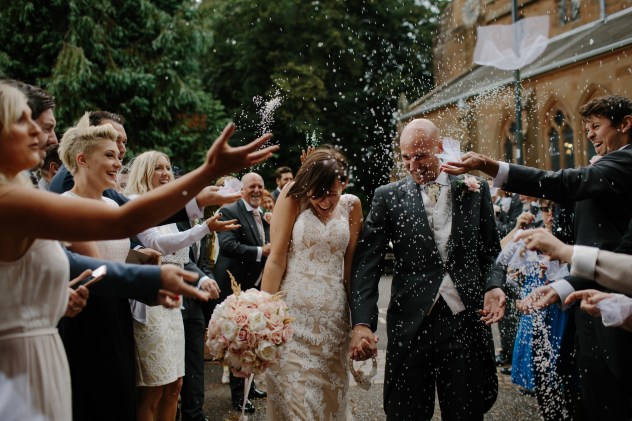
tom-pumford-wedding-photo
There is a great deal of celebration of romantic love, but when do we celebrate friendship? I’d love to see more books, songs and films about friendship. Photo by Tom Pumford on Unsplash.


The best friendships are not based on selfishness

And I don’t think we should just stay in touch with our friends for selfish reasons alone. Friendship should be about a mutual bond and the willingness to go out of our way to support the other person when they need it. I worry that we are coming to view friendship in quite a selfish light; many popular internet memes encourage us to ditch our ‘negative friends’. And yet, approximately one in four of us will experience a mental health problem at some point in our lives [3]. Are we expected to be constantly positive, encouraging and in agreement with our friends? Surely the occasional argument, or grumpy mood, or patch of depression is natural and part of being a good friend is to be able to resolve conflicts, not over-react to less-than-perfect behaviour and to support our friend through a difficult time. (That said, it’s another matter if your friend is routinely putting you down or acting aggressively etc. I would not suggest anyone risk their own mental or physical health for the sake of a friendship.)

Loneliness is rife

I often come across people online who have no friends, and indeed felt like I had none at various points in my life. Some might say that these are difficult or selfish people, but I think that’s unlikely. Many are people who come across great online. Many attribute the ‘disappearance’ of their friends to a decline in health, which they assume made their friends feel uncomfortable or view them as too inconvenient. Others have moved away from their university friends and are finding it impossible to make friends in their new town, and yet others attribute their lack of friends to a disability or depression. The emergence of friend-making sites such as Girlfriend Social and Together Friends is a response to the large numbers of people struggling to make new friends.

nick-abrams-couple-and-lone-man-at-sunset
Photo by Nick Abrams on Unsplash.

Perhaps we should not be so quick to write off old friends

I admit I now regret writing off a couple of former friendships. I’m quite slow to do… I generally cherish every friendship and don’t turn anyone away. But after two of my best friends said hurtful things, I considered our friendships over, and wonder now if I was a little hasty to do so. I’m sure I’ve also been a bit neglectful of some friendships during very busy patches of my life. I’ve also been on the receiving end of friendship neglect, and I find it very sad that people I’d gone out of my way to support in difficult times don’t value our friendship enough to maintain contact.

Friendship is a great gift, and need not be a burden

I have always thought that the gift of friendship is an easy one to bestow. A kind word and a bit of genuine listening costs nothing and need to take up much time. Grabbing lunch with someone, or dropping someone a text or email is not a momentous task, but can do a great deal to relieve someone of loneliness, provide sympathy or advice, and make them feel cared for. I think often it’s a matter of finding what works for both people, be it periodic phone calls, Whatsapp messages, Facebook etc. Even parents busy with young children can find a way to check in with old friends from time to time. When you look out for people in this way, not only do you store up people who will support you when you need it, you also help reduce mental health problems and even suicide.

kevin-gent-young-male-friends-bonding
Supportive friendships are a precious thing. Photo by Kevin Gent on Unsplash.

I think parents should also not assume that friends will want to see them without their kids or partners. Often friends will accept that it’s not easy for them to continue as they did before marriage and parenthood, and will be ready to accept – or even appreciate – different types of get-togethers.

And how about some more books, music and films celebrating great friendships? Heroic, impressive, beautiful friendships. I don’t know about you, but I’m quite bored of it all being about romance.

What do you think? Is friendship undervalued? What have your experiences of friendship been? How do you stay in touch with friends? Comment below!

References

[1] http://www.telegraph.co.uk/news/uknews/12011714/Divorce-rate-at-lowest-level-in-40-years-after-cohabitation-revolution.html

[2] https://www.theguardian.com/lifeandstyle/2012/feb/01/top-five-regrets-of-the-dying

[3] http://www.bbc.co.uk/news/uk-35322354

Related links:

https://well.blogs.nytimes.com/2010/08/16/when-friends-disappear-during-a-health-crisis/comment-page-2/?_r=0

http://princessinthetower.org/how-chronic-pain-affects-your-friendships-and-what-to-do-about-it/

http://www.tesh.com/articles/why-is-friendship-so-undervalued/

http://www.therisingblog.com/blog/2016/6/10/why-dont-i-have-friends-anymore

https://lifeinprogress290296.wordpress.com/2017/02/07/loneliness-knows-me-by-name


We need to learn to manage ‘choice overwhelm’

This is something that’s really been on my mind lately. Having many choices is very much a double-edged sword. On the one hand, it’s good to have options, but, on the other hand, it’s easy to become overwhelmed and over-stretched, never feeling like you have enough time for anything. I think some people are more prone to this than others.

It is often assumed that a benefit of the free market is having lots of choice. I’m sure it’s better than having no choice, but at times I do wish there was a bit less choice. I’ve often spent hours trying to find the best price or the best product, and it was tedious and exhausting. I felt, somehow, obliged to do it. If you enjoy shopping around, or, alternatively, don’t feel obliged to do it, I envy you!

A writer in the Economist seems to agree with me, saying “The explosion of available goods has only made time feel more crunched”. [1]

A gender thing?

Women seem to be more prone to this than men, as we find ourselves traipsing round all the shops to be sure we’re getting the absolute best deal on something, whereas men seem to find it a lot easier to just buy the first suitable item. I remember a journalist once saying the same difference applies to holiday booking. Of course, browsing and getting the best deal can be really enjoyable, if you like that kind of thing… But, if you don’t, how do you drop the habit?

Never enough time, and FOMO

And it’s not just shopping that can be plagued by choice overload. Our leisure time can often feel fraught as we struggle to juggle invites, events we want to attend, chores that need doing and hobbies we’re struggling to keep up with, not to mention exercise and spending time with friends and family. When did having lots of wonderful options turn into feeling like we never have enough time and always feeling like we’re missing out?

child-in-maze

The vast, messy, ever-present internet

Obviously, the internet has a lot to do with choice overload. It offers almost infinite resources including blogs, vlogs, Facebook, Twitter, Instagram, Snapchat and news websites. I was wondering the other day whether teenagers are allowed to have their phones at school lunchtimes. Our hour-long lunchtimes seemed to last forever and were usually very boring; I feel like I could’ve had a better time online. Most often though, I reminisce about an era when people didn’t check their phones during our lunch date, an era when I seemed to spend a great deal of time enjoying the outdoors… It comes as no surprise that 60% (or more) of British 16−24-year-olds visit a social media site several times a day. [2] Ultimately, I think the internet is a good thing, but how can someone who used to read magazines from cover to cover get the most out of a great resource without feeling overwhelmed?

Netflix and such

The same issue can arise with things like Netflix: in the olden days, we had a choice of 4 channels and recording something to watch later was a bit of a pain. You went to a shop to hire videos. Now, we are faced with a huge choice of material, on demand. But we simply don’t have time to watch it all so, how to choose?

doors-1767562_960_720
Thanks to the internet, our leisure options now look a bit like this. (Photo of 7 doors from Pixabay)

The pain of prioritising

The obvious answer to the ‘too much choice’ problem is clear: prioritise. For years I somehow didn’t realise this was necessary, accepting invites in a first-come-first-served manner, planning my life with a scattergun approach, lacking any ‘white space’ to reflect on life or make decisions. At one point, I actually had to pencil in my diary a slot to make a decision on some big issue, because otherwise the time didn’t arise! Looking back on that time, I’m so glad that my life is now so much more spacious.

Prioritising has a big place in my life now: in my work and professional development, in my personal admin time and in my leisure time. I’m the kind of person who finds many things interesting, so prioritising is, frankly, often quite painful, especially when it means saying ‘no’ to something. Ultimately though, time is finite and I don’t want to be one of those people who is completely over-stretched, never really listening to anyone or having time to reflect on their relationships and lifestyle. So, I’ve chosen my key hobbies (three of them), I’ve narrowed down my areas of work, and I prioritise friends based on how much they seem to care about our friendship.

Other strategies to manage choice overload and overwhelm

I’m thinking aloud here. Feel free to help me in the comments section below! This is very much a work in progress for me.

  • Think about how you fill your time. Rank the activities, from ‘favourite’ to ‘not that keen on’. Can you cut anything out? I realised I don’t really enjoy eating out: now I only do it for special occasions like birthdays or when a friend suggests it. Can you increase your favourite things? Maybe you just need to suggest them more, and people will be as keen as you are.
  • Narrow down the apps and social media. Do you really need to be on them all? Decide which ones are of most benefit to you and your network, and bin off the rest.

daria-nepriakhina-unsplash-woman-looking-at-phone

One study shows that young adults use their smartphones roughly twice as much as they estimate that they do (an average of five hours a day). [3] Photo by Daria Nepriakhina (Unsplash)

  • See the bigger picture: It’s not all about you. When you prioritise, factor in the feelings of relevant people. And give yourself enough time to help a stranger on your way somewhere, or do something for a friend at the weekend. Life isn’t a hedonistic pleasure spree, even if advertisers want us to think it is.
  • Narrow down your hobbies to the two or three most important ones. Combine them with socialising if appropriate e.g. in art clubs, book groups, dance groups, Meetups etc.
  • Learn mindfulness and slow down. Give up the frantic pace and really get the most out of what you’re doing right now.
  • Accept that life is full of obstacles and other people’s inefficiencies. Sometimes there’s nothing you can do, so take a deep breath and let go. Don’t resent the ‘wasted time’ − it would only make you angry.
  • At the risk of losing email subscribers to this blog, I’m still going to say it: subscribe to only a select few things. 
  • Set limits: decide in advance how long you’ll spend looking for the best deals (or whatever it is you’re doing), or limit yourself to looking only at a certain number of websites, for example.
  • Whatever you do, don’t get emails and Facebook notifications popping up on your laptop or phone screen!
  • In your free time, try thinking ‘what do I actually feel like doing now?’ Learn to go with your instincts instead of following a habit to go on Netflix, Facebook or whatever. Maybe you’ll actually feel more like going for a walk, painting, calling a friend, baking a cake…. Don’t know about you, but too much time online makes me feel bug-eyed, zoned out and drained.
  • Keep some white space in your diary. 
  • Look for recommendations g. try the Good Garage guide if you need to choose a local garage and consider subscribing to Which?

Share your ideas and reflections below!

Related links:

http://liveyourlegend.net/the-art-of-slowing-down-12-simple-ways/

https://www.psychologytoday.com/blog/turning-straw-gold/201109/4-tips-slowing-down-reduce-stress

http://bemorewithless.com/artofslow/

https://wordpress.com/read/blogs/105969207/posts/274 When choices become clutter


References:

[1] http://www.economist.com/news/christmas-specials/21636612-time-poverty-problem-partly-perception-and-partly-distribution-why

[2] 2014/15 Department for Culture, Media and Sport https://www.gov.uk/government/uploads/system/uploads/attachment_data/file/476095/Taking_Part_201415_Focus_on_Free_time_activities.pdf

[3] http://journals.plos.org/plosone/article?id=10.1371/journal.pone.0139004


Why we shouldn’t automatically describe low libido as a ‘problem’

Guest post

There is a lot of wisdom to be found on the internet. I’ve searched about for advice on many topics, from how to clean a toaster (there were special reasons) to how to deal with commitment phobia. Occasionally, prominent views on the net annoy me quite a lot, and that is the case with the ‘low libido problem’.

Ironically, I first became aware of this view when searching about low libido in men and high libido in women. Instead of finding much about either of those things, I found hundreds of links about low libido in women, and how to ‘solve’ it. (Thankfully there seems to be more about high sex drive in women and low sex drive in men now than when I looked).

I wish to point out at this stage that I like bras, skirts and dresses and I don’t have a problem with anyone ogling a fit woman as long as ogling a fit man is ok too. I actually often find men easier to get on with, and think that masculinity has its perks. Let’s face it, I’m no Germaine Greer.

That said, I find it concerning that pretty much no-one seems to question whether low libido in a woman is a problem. Or whether high libido in men might actually be the problem… Surely this is an issue which can rightly be examined from either viewpoint.

alejandra-quiroz-unsplash-couple-kissing-in-dark
In a society obsessed by sex, no wonder low sex drive is often immediately labelled as abnormal. (This stunning photo of a kissing couple was taken by Alejandra Quiroz and posted on Unsplash.)

The medical profession talks of ‘female sexual arousal disorder’. According to webmd ‘loss of sexual desire is women’s biggest sexual problem’. NHS Choices describes it as a ‘common problem’.

Now, no one knows better than I do that a discrepancy in sex drive is quite a bummer in a relationship. In almost all of my relationships there was a discrepancy and it caused quite a few problems: frustration, uncomfortable pressure, sulking, thoughts of straying and feelings of abnormality. But I never thought that low libido is always the problem and high libido completely normal. And what is ‘high’ or ‘low’ anyway?

As far as I can gather, low libido is not a medical illness. It may occasionally be linked to another illness, but in itself it’s not physically harmful. Arguably, high libido is more of a problem because it could be linked to sexual harassment, viewing hard-core porn and distraction from work or studies. So where are the medicines for lowering sex drive? Or the articles about how to calm those raging hormones?

I can’t help thinking that this whole issue is mainly being viewed from a stereotypically male perspective which suggests that men are entitled to a certain amount of sex and, if they’re not getting it, there’s a problem with their partner. It’s an easy position to get into. When I was the one in the relationship with the higher sex drive, I have to admit I did sometimes feel like my partner had a problem and that it would be quite nice if some harmless food or medicine would give him a bit more drive.

Processed with VSCOcam with t1 preset
Relationships are about much more than sex, and sex drives change, unpredictably, over time. (Lovely photo of a couple looking on a hill with a mountain view by Anelise Phillips, taken from Unsplash).

According to sex therapist Graeme Orr, in most couples the sex drive is not equal in both partners [1].Having been both the more sexual and the less sexual partner in a relationship, I’m wary of saying that if you’re not perfectly matched, you shouldn’t be together. And I definitely don’t think that low libido is necessarily a problem: personally I find it quite frustrating having a high sex drive – it often comes with aggressive feelings, tension and stress – whereas with a lower sex drive I can concentrate much better and feel chilled out.

Surely the real issues are: Is your sex drive causing you a problem? And if so, why? Is there a discrepancy in your relationship and, if so, how can you both deal with it in a loving way, from a neutral perspective? Maybe there are ways the more sexual partner can get some release without upsetting the less sexual partner. Maybe there are some simple changes that would make sex more appealing to the less keen one? Or harmless ways to decrease one person’s appetite, as well as potentially harmless ways to increase that of the other?

Male and female sex drive is prone to change throughout our lives, not just in line with hormonal changes but also during periods of stress or depression. I can’t help feeling that the answer for any couple which isn’t perfectly ‘libido matched’ must be to approach the issue in that way, rather than there being the sense that the low libido partner has ‘a problem’.

maxime-lelievre-unsplash-woman-chilling-by-lake
There are benefits to a low sex drive, such as feeling more relaxed. (Great photo of a girl by a lake by Maxime Lelievre, from Unplash.)

And if you’re single with a low sex drive, so what? Plenty of ways to enjoy that.

I’d LOVE to know your views and experiences! Unless you’re a sexist pig – in which case, not so much.

Related links:


http://www.yourtango.com/experts/debra-smouse/mans-low-sex-drive-isnt-always-sign-relationship-trouble

https://wordpress.com/read/blogs/5174737/posts/15393 A poem on low libido! Love this.

References:

[1]  http://www.aarp.org/home-family/sex-intimacy/info-06-2012/steps-to-resolve-sexual-desire-differences.html